Source Solvent Inkjet Printer Nozzle for Food, Drug, Chemical
Compare 30 Solvent Inkjet Printer Nozzle options from verified Chinese manufacturers. These accessories support high-speed coding on food, drug, and chemical product packaging with customizable features and reliable performance.
Key considerations
Products List

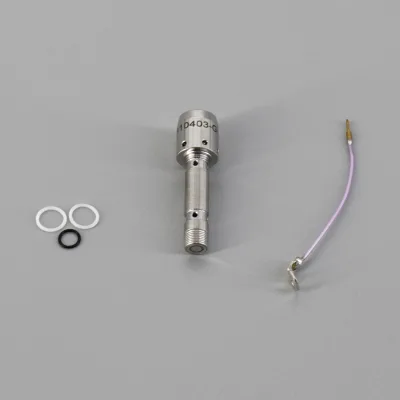
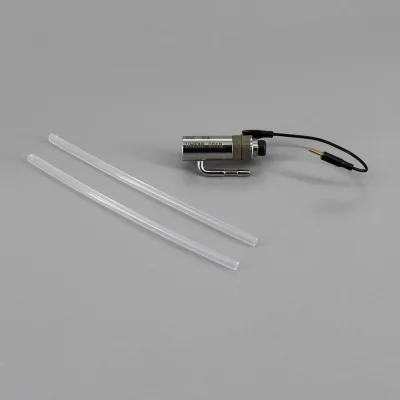


Comprehensive Sourcing Guide
Strategic Sourcing Guide for Solvent Inkjet Printer Nozzles
Understanding Technical Specifications and Compatibility
When sourcing a Solvent Inkjet Printer Nozzle, the primary objective is to identify components that align precisely with the operational mechanics of the specific printing system. The market offers a diverse array of nozzle types, ranging from general-purpose units to specialized accessories designed for high-speed industrial applications. Buyers must first distinguish between the nozzle as a standalone component and its integration within a broader system, such as a continuous jet type coding machine or a small character inkjet printer. The technical performance of a nozzle is heavily dependent on the ink type it is designed to handle. In the context of solvent-based systems, the nozzle must withstand the chemical properties of solvent ink, which often requires specific material durability to prevent clogging or degradation.
Compatibility is the most critical technical factor. The supply chain data indicates a wide variance in model numbers, suggesting that nozzles are often proprietary to specific printer brands or series. For instance, specific model identifiers such as EB14431, VB-SHN1410, and 451694 appear in the market, alongside designations linked to brands like Imaje and Videojet Willett. This diversity implies that a buyer cannot assume universal fitment. A nozzle labeled for a "Nozzle" category might be a generic replacement, whereas others are explicitly categorized as "Printer Accessories" or "Inkjet Printer Accessories." The application of the nozzle also dictates its design; for example, a nozzle intended for a 25*25 DOT Matrix system will have different physical tolerances than one used in a high-speed continuous jet printer operating at 70-280m/Min.
Furthermore, the physical dimensions and packaging standards provide clues about the intended use. Some specifications list packing dimensions of 625455730mm, which likely refers to the shipping container for bulk orders rather than the nozzle itself, while others mention standard sizes like 0.5kg for the unit weight. Buyers must verify the "Print Distance," which is observed to be a maximum of 30mm from the print-head bottom to the printing surface. If the nozzle alters this distance or the spray pattern, it may fail to meet the operational requirements of the production line. The language system of the printer, often multilingual, is another factor, as the nozzle's performance must support the precise character rendering required for complex data strings.
Compliance and Certification Verification
In the industrial procurement of solvent inkjet components, verifying compliance with international standards is essential for ensuring safety, environmental adherence, and operational reliability. The supply landscape includes products that claim certifications such as ISO, RoHS, and CE. While these certifications are frequently cited, buyers must treat them as observations rather than guaranteed attributes for every listed product. The presence of "ISORoHS" or "CE" in product descriptions indicates a potential alignment with safety and environmental standards, but the specific scope of these certifications must be confirmed with the supplier.
For solvent-based systems, RoHS (Restriction of Hazardous Substances) compliance is particularly relevant, as it ensures the nozzle and associated materials do not contain restricted hazardous substances that could contaminate the solvent ink or the final product. Similarly, CE marking suggests conformity with health, safety, and environmental protection standards for products sold within the European Economic Area. However, the background data notes that certification status should be treated with caution; therefore, buyers should request current, valid certification documents rather than relying solely on product page assertions.
The "Quality" attribute observed in the market, described as "Goods Quality Support with Customer Demand," suggests that suppliers may offer quality guarantees, but these are not standardized. Buyers should verify if the supplier adheres to specific industry standards like ISO 9001, which is mentioned in the background context, though its specific application to the nozzle manufacturing process requires validation. Additionally, the "Automatic Grade" of the equipment often implies a level of precision that must be maintained by the nozzle. If the nozzle is part of an automatic system, any deviation in material quality could lead to significant downtime. Therefore, the verification process should include a request for third-party test reports or certification copies that explicitly cover the nozzle component, not just the printer system as a whole.
Cost Drivers and Pricing Dynamics
The pricing of solvent inkjet printer nozzles is influenced by a complex interplay of factors, including material composition, brand compatibility, and order volume. The observed price range in the market spans from $0.08 to $3,000, a vast disparity that reflects the difference between generic consumables and high-precision, proprietary components. The lower end of the spectrum likely represents basic nozzles or bulk ink cartridges, such as the "Thermal Ink Cartridge" with a capacity of 42ml, which are sold as single items. In contrast, the higher price points may correspond to specialized printheads, such as the "L800 Printhead," or complete accessory kits designed for specific high-end models like the V8820 or 451694.
Minimum Order Quantity (MOQ) is another significant cost driver. The market data indicates an MOQ range of 1 to 500 units. For small-scale operations or maintenance teams requiring immediate replacements, an MOQ of 1 is advantageous, allowing for the purchase of single items without financial commitment to bulk stock. However, for large-scale manufacturing facilities, negotiating an MOQ closer to 500 could result in substantial per-unit cost reductions. The "Selling Units" being listed as "Single item" for many products suggests that the market is flexible, but buyers should be aware that bulk purchasing might be necessary to access certain price tiers or specialized inventory.
Material costs also play a crucial role. The "prod_standard" for some products is listed as "plastic," while others are packaged in "Carton" or "Wooden Case." The choice of material affects durability and cost; plastic components may be less expensive but offer lower resistance to harsh solvents compared to metal or composite alternatives. Additionally, the "Standard" section lists various codes like 9020, 9040, S8, S4, and S7, which may refer to specific manufacturing tolerances or compatibility codes that influence the final price. Buyers should analyze the total cost of ownership, considering not just the purchase price but also the lifespan of the nozzle and the frequency of replacement required to maintain the 70-280m/Min printing speed.
Typical Applications and Industry Use Cases
Solvent inkjet printer nozzles are integral to a wide range of industrial applications, primarily where high-speed, durable coding is required. The observed "Usage" categories include Food, Drug, Daily Industrial, and Chemical Products, indicating that these nozzles are critical for traceability and labeling in regulated industries. In the food and pharmaceutical sectors, the ability to print clear, permanent codes on packaging is non-negotiable. The nozzle must ensure that the solvent ink adheres properly to various substrates, including plastic, box, carton, and glass, as noted in the "Application" attributes.
The "Application of Classification" as a "Small Character Inkjet Printer" highlights the primary use case: marking small details such as batch numbers, expiration dates, and barcodes on production lines. These printers often operate in environments where speed is paramount, with printing speeds reaching up to 280 meters per minute. The nozzle must maintain consistent performance at these high velocities to prevent misprints or smudging. Furthermore, the "Working Patterns" being "On-Line" suggests that these nozzles are designed for continuous operation without frequent shutdowns, making them suitable for 24/7 manufacturing environments.
In the chemical and daily industrial sectors, the chemical resistance of the nozzle is vital. Solvent inks are aggressive, and the nozzle material must resist corrosion and clogging. The "Ink Type" is consistently identified as "Solvent Ink" or "Solvent Based Ink," which requires nozzles that can handle the volatility and chemical composition of these fluids. The "Type" of printer, often a "Continuous Jet Type Coding Machine," implies a specific mechanism where the ink stream is continuously charged and deflected. The nozzle's role in this mechanism is to ensure the ink droplets are formed and directed with precision. Whether the application is for coding on plastic bottles, cardboard boxes, or glass containers, the nozzle must be compatible with the specific ink and substrate combination to ensure legibility and durability.
Supplier Evaluation and Selection Criteria
Selecting the right supplier for solvent inkjet printer nozzles requires a rigorous evaluation process that goes beyond simple price comparison. The "prod_origin" and "place of origin" data consistently point to China, specifically Guangdong, as the primary manufacturing hub. While this indicates a mature supply chain, buyers must verify the specific capabilities of the supplier. The "Brand Name" DNM is observed in the market, but buyers should not limit their search to a single brand. Instead, they should evaluate suppliers based on their ability to provide compatible parts for various printer models, including those associated with Imaje and Videojet Willett.
Key evaluation criteria include the supplier's ability to provide accurate model matching. The market lists numerous model numbers, such as EB18245, PP0393, and ecjet, which suggests a fragmented market with many specialized components. A reliable supplier should have a comprehensive inventory or the ability to source specific parts quickly. The "Shipping Date" attribute, listed as "Within 3 Working Days," is a critical metric for supply chain efficiency. Buyers should confirm if this lead time is consistent across all orders or if it varies based on stock availability.
Additionally, the "Customization" attribute being "Available" is a significant advantage. Suppliers who offer customization can tailor nozzles to specific printer configurations or ink types, providing a competitive edge for buyers with unique requirements. However, customization often comes with higher costs and longer lead times, so buyers must balance this against their operational needs. The "Condition" of the products is listed as "New," which is standard, but buyers should verify if refurbished or used parts are available, as these might be a cost-effective option for non-critical applications. Finally, the "Quality" support mentioned in the product data should be validated through customer references or trial orders to ensure the supplier can deliver consistent performance.
Quality Control and Long-Term Procurement Strategy
Implementing a robust quality control (QC) strategy is essential for maintaining the efficiency of solvent inkjet printing operations. The "Quality" attribute in the market data, described as "Goods Quality Support with Customer Demand," implies a commitment to meeting specific buyer requirements, but this must be backed by concrete QC processes. Buyers should request detailed inspection reports that cover dimensional accuracy, material integrity, and performance under solvent exposure. The "Standard" codes like 9020, 9040, and S8 may refer to internal quality benchmarks, but external verification is necessary to ensure these standards are met.
Long-term procurement considerations involve building a sustainable relationship with suppliers who can provide consistent quality over time. The "Packaging" of the products, ranging from "Box" to "Carton" and "Wooden Case," plays a role in protecting the nozzles during transit. Damaged nozzles can lead to production stoppages, so buyers should ensure that the packaging is robust enough to prevent damage. The "prod_packing" details, such as "Carton" or "Wooden Case," should be evaluated for their suitability for the specific shipping route and duration.
Furthermore, buyers should consider the lifecycle of the nozzle. The "Print Distance" and "Printing Speed" specifications suggest that the nozzle is a high-wear component. Establishing a proactive replacement schedule based on usage hours or print volume can prevent unexpected failures. The "Capacity" of related components, such as the 42ml ink cartridge, should also be factored into the procurement strategy to ensure a steady supply of consumables. Finally, buyers should maintain a buffer stock of critical nozzles to mitigate the risk of supply chain disruptions, especially given the "Within 3 Working Days" shipping lead time, which may vary during peak demand periods. By focusing on these long-term strategies, buyers can ensure the reliability and efficiency of their solvent inkjet printing systems.
FAQs
What ink type is compatible with these solvent inkjet printer nozzles?
These nozzles are designed for solvent ink and solvent-based ink. They must withstand chemical properties to prevent clogging or degradation during continuous operation on various substrates like plastic, glass, and carton.
Which printer models are compatible with these specific nozzle accessories?
The nozzles support models such as V8820, EB14431, and VB-SHN1410. They are also compatible with systems associated with brands like Imaje and Videojet Willett, requiring precise model matching for proper fitment.
How fast can a continuous jet type coding machine operate with these nozzles?
The printing speed ranges from 70 to 280 meters per minute. This high-speed capability requires nozzles that maintain consistent performance to ensure clear character rendering on production lines without smudging.
Can I find nozzles with ISORoHS and CE certifications available?
Yes, some products list ISORoHS and CE certifications. Buyers should verify these claims with current documentation as they indicate potential alignment with safety and environmental standards for restricted hazardous substances.
What is the maximum print distance for this continuous jet type system?
The maximum print distance is 30mm from the print-head bottom to the printing surface. This specification is critical for ensuring the nozzle spray pattern aligns correctly with the target application surface.
Which suppliers offer customization for these inkjet printer accessories?
Customization is available for these products. Suppliers can tailor nozzles to specific printer configurations or ink types, though this may involve higher costs and requires balancing against operational needs.
What is the typical shipping lead time for these solvent inkjet components?
The shipping date is typically within 3 working days. This rapid turnaround supports maintenance teams requiring immediate replacements, though actual times may vary based on specific stock availability and order volume.